
Issues and Practises Essay
For this essay I have decided to compare and contrast the issues and practises of 3D/textile designer Lauren Moriarty and graphic designer Mike Rigby from the agency True North. I have decided to compare these two artists/designers because of their obvious differences in practise and methodologies.
Lauren Moriarty has a BA (hons) degree in Multimedia Textiles (first class honours) from Loughborough University School of Art and Design (2001) and an MA in Industrial Design from Central Saint Martins College of Art and Design, London (2005). She classes herself as a textile, product and industrial designer and she has mostly works with materials, which she finds interesting and unusual. Such examples of these are different types of plastics, foams and neoprene. She became interested in these different materials while at studying for her degree, and found that with the use of laser cutting she could manipulate the materials to her will. After graduating from college she went on to do a Masters working with the same materials in more complex ways she set out to ‘brand herself’, by creating a unique selling point. While studying her Masters new techniques became available for use such as heat bonding for her 3D rubber structures she would be most renowned for. After finishing her Masters she interest from many sections of the industry, the day that she exhibited her work. She explained how difficult it was carrying out orders that were given to her with no prior knowledge of what was expected, but she stuck with it until she became bored making materials and objects just to be sold. She explains how it eventually became just a matter of consumerism and lost all of its ‘experimental fun’.
Mike Rigby studied at Preston University for 4 years and manages to get a one-month placement in-between. Since then he has worked at many prestigious agencies, such as Imagination London, The Chase, Landor, Pentagram, Interbrand Australia and he now works at True North In Manchester. Mike described working at these places ‘a challenging, and educating’ where people are helpful. His work between agencies has lead to him having a very credible name in the design community. To mike the amount of negatives much out-weigh the positives, but if you are serious about becoming a designer the benefits will be found through your enjoyment of the work you get to produce. A short list of the positives and negatives are as follows:
Positives:
Being able to communicate information (being in control of what people are subjected to).
Giving the people a voice.
Helping to tackle certain social-political issues.
Negatives:
The competitive nature of the industry as it is now, due to the amount of interest in design and the competition that brings.
Long hours with no paid overtime.
The amount of pressure and the poor quality of work of which happens as a consequence.
Initial pay is poor.
Client interference in the work produced.
Lost pitches.
Negative environmental issues.
Over packaging.
Contribution to consumerism.
The way that Mike and Lauren initially went different ways with their ascent into the industry is unsurprising as both followed the general direction of what must be done to initially succeed. Mike went straight into the industry, as did Lauren, yet Mike set out building his reputation in a very different way. Mike set out working for agencies on placements to help climb the proverbial ladder, while Lauren set out working for herself, building her reputation through freelance projects. Both of which seemed to work as effectively as the other.
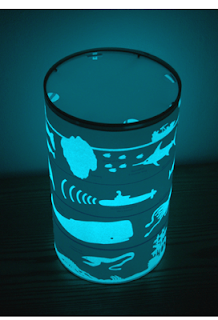
After becoming bored of working solely for the industry Lauren decided to take a step back in the hope that the experimental aspect of her work that she enjoyed so much could be reclaimed. After sorting out some studio space she set to finding innovative ways to help build her reputation. An example of which can be seen in her collaborative nightlight project. This particular project created a nightlight, which was also educational and fun for the children who it would be intended for. Lauren also discussed the importance of setting up a website for her work. She explained how easy and productive it was to set up a Paypal account, and the benefits in which resulted from this simple alteration.
Mike discussed the importance of placements and how they are an integral factor in the success of oneself as a designer. During this Mike suggested the best ways to get noticed over the sea of other design students hoping to get placements. He mentioned that showing six well-executed projects each with great ideas, will get you noticed and the importance of impressing your tutors (as it will be the same situation when you leave college). He also mentioned that interviews not only act as a process where you can show off the quality of the work you produce, but is also heavily for how well you are going to fit in with the other employees of that specific agency. This is so that when you are working with your colleagues the production of the work will flow much easier. He goes on to say other key elements in getting a placement and eventually getting a job are ‘taking professional pride in everything you do’, ‘being proactive and getting involved’, having a ‘positive attitude towards your work and the work of others’, always showing as much enthusiasm as possible, showing that you are hungry to learn and occasionally making a brew for everyone. Another interesting quote, which Mike said relates to the ethics of Michael Wolff, ‘rejection is part of design’.
The ways which both Mike and Lauren have built their reputations have differed in many ways, yet the lessons each have learn seem to be quite similar. The most beneficial aspect of having them come and give us the lectures was their attitudes towards the work which they have produced, and the overall positivity they both express towards working in a design based environment. It shows that the journey to get where you want to be may be difficult, but if you want it bad enough the rewards will speak for themselves.


